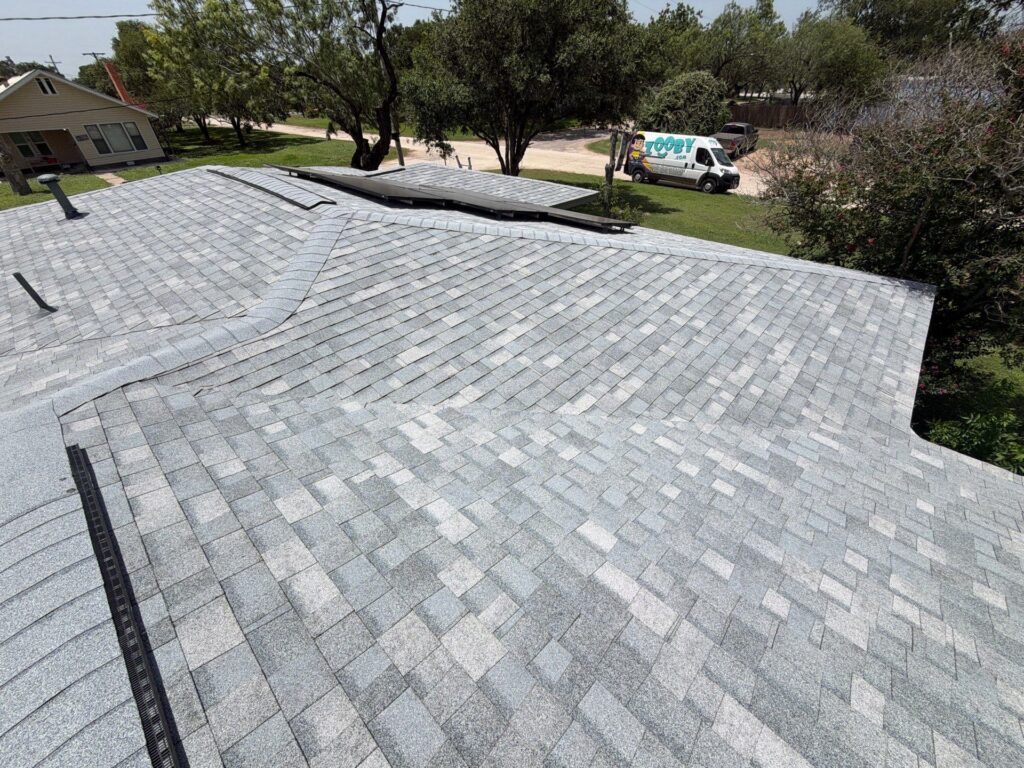
The $7,000 Hail Surprise: What San Antonio Homeowners Should Know Before the Next Storm
A hailstorm does not have to destroy your home to create a financial problem.
For many San Antonio homeowners, the surprise comes later, when they find out how their wind or hail deductible actually works. A homeowner with a $350,000 insured home and a 2% wind or hail deductible could be responsible for $7,000 before insurance coverage applies.
That number changes the way you think about roof damage.
It means your roof condition matters before the next storm. It means your deductible matters before you file a claim. And it means the smartest time to understand your options is before hail, wind, or heavy rain force you into a rushed decision.
Zooby helps San Antonio homeowners inspect first, repair what can be repaired, consider Zoobification when the roof qualifies, and replace only when necessary.
Zoobification is Zooby’s roof rejuvenation option for qualifying asphalt shingle roofs that are aging but not beyond saving. It is not a replacement for every roof, and it is not used to cover up damage. It is one possible option after inspection shows the roof still has useful life. (Zooby Neighborhood Super Heroes)
Why hail damage deserves attention in San Antonio
Hail is one of the most expensive severe weather threats for homes, roofs, vehicles, crops, and businesses. The Insurance Institute for Business & Home Safety says annual hail losses routinely exceed $10 billion, and damage from a single hailstorm hitting a large city can reach $1 billion. (IBHS)
That matters in a place like San Antonio, where severe storms can move through quickly, and damage can vary from one neighborhood to the next. One side of town may see rain and wind. Another may get hail large enough to bruise shingles, knock away granules, dent vents, and expose weaknesses that were already forming.
Hail is also difficult to study in real time. NOAA’s National Severe Storms Laboratory has reported on a hail camera system that captures 4K footage at 330 frames per second, enabling researchers to measure hailstone size, depth, and in-flight velocity. (inside.nssl.noaa.gov)
For homeowners, the takeaway is simple. Hail is not only a weather event. It can become a roof event, an insurance event, and a cash-flow event.
The hidden cost is often the deductible.
Many homeowners know they have insurance, but fewer know what their wind or hail deductible means in dollars.
The Texas Department of Insurance says deductibles may be flat dollar amounts or percentages. In its example, a home insured for $150,000 with a 5% deductible has a $7,500 deductible. If the roof repair costs $6,500, the policy would not pay because the repair amount is less than the deductible. (Texas Department of Insurance)
That example is important because it shows what many homeowners do not realize until after damage happens.
A homeowner can have roof damage. A homeowner can have insurance. And a homeowner may still receive no payment if the repair cost is below the deductible.
For a $350,000 insured home, a 2% wind or hail deductible equals $7,000. That does not mean every roof repair will cost $7,000. It means the homeowner may be responsible for that amount before the insurance company contributes, depending on the policy and the claim.
That is the $7,000 hail surprise.
Your roof may already be vulnerable before hail arrives
The financial side is only half the story.
The condition of your roof matters just as much. A roof that has already been weakened by heat, UV exposure, wind, age, poor ventilation, tree debris, or installation issues may be more vulnerable when hail hits.
San Antonio roofs can be weakened by heat, UV exposure, wind, hail, heavy rain, tree limbs, clogged gutters, poor ventilation, installation mistakes, foot traffic, and age. Any one of these can create problems, but the real risk often arises when several overlap. Zooby’s roof-damage guide gives homeowners a deeper look at these risks and how inspection helps determine whether repair, Zoobification, or replacement is the responsible next step. (Zooby Neighborhood Super Heroes)
This is why inspection matters before the next storm.
A roof that looks fine from the driveway may already be brittle, losing granules, lifting at the edges, or forming weak spots around flashing, vents, valleys, and pipe boots. If hail hits a roof that was already vulnerable, the damage may be worse.
An inspection gives you a baseline. It helps you understand what condition the roof was in before a storm changes the picture.
What should San Antonio homeowners do before the next hailstorm?
The first step is to inspect the roof.
A proper roof inspection can help identify visible storm damage, aging shingles, granule loss, lifted shingles, cracked pipe boots, flashing issues, ventilation concerns, and other roof vulnerabilities.
The second step is to review the insurance policy.
Look for the declarations page and find the deductible section. Check whether the deductible is a flat dollar amount or a percentage. Look specifically for wind, hail, named storm, or all-perils deductibles. Then calculate what that percentage means in dollars.
The third step is to understand your roof options before there is pressure.
If damage is isolated, repair may be enough. If the roof is aging but still has life left, Zoobification may be an option if the roof qualifies. If the roof is too damaged, too brittle, or no longer a responsible candidate for repair or rejuvenation, replacement may be the right choice.
If a larger project is needed and waiting would pose greater risk, ask Zooby about financing options.
Where Zoobification fits
Zoobification is designed for qualifying asphalt shingle roofs that are aging but not beyond saving.
Before rejuvenation is considered, Zooby inspects the roof for damage, wear, brittle shingles, failing components, and other issues that may affect the roof’s eligibility. If the roof is still a good candidate, Zoobification may help restore its flexibility and extend its useful life. If the roof is too damaged or too far gone, replacement may be the more responsible choice. (Zooby Neighborhood Super Heroes)
That is the point of inspection. The homeowner should not have to guess.
Zooby also provides a Limited Credit Warranty for Zoobification. Under the written warranty, if complete roof replacement becomes necessary after Zoobification, Zooby applies a credit toward a full roof replacement performed by Zooby, subject to the warranty terms. If replacement is required within 12 months of the Zoobification service date, 100% of the Zoobification purchase price is credited toward replacement. After 12 months, the credit is prorated evenly over six years. The credit has no cash value and is non-refundable. (Zooby Neighborhood Super Heroes)
This should be understood correctly. It is not a cash refund. It is a credit toward a future Zooby roof replacement under the warranty terms.
Should you file a claim after hail damage?
The answer depends on the roof condition, the repair cost, the deductible, and the policy.
Zooby can inspect the roof, document visible conditions, and help the homeowner understand whether repair, Zoobification, or replacement is appropriate. The insurance company determines coverage.
Before filing a claim, homeowners should know two things.
What did the storm actually do to the roof?
What is the deductible in real dollars?
If the repair cost is close to or below the deductible, the homeowner may want to understand the situation clearly before deciding what to do next.
Be careful with deductible waiver offers.
After storms, some homeowners hear offers that sound helpful, especially when a large deductible is involved.
Be careful.
The Texas Department of Insurance says it is illegal for contractors to waive a deductible or help homeowners avoid paying it. TDI also warns that contractors may not offer to waive, rebate, or absorb a property policyholder’s deductible. (Texas Department of Insurance)
That is another reason to work from facts rather than pressure.
Know your roof condition. Know your deductible. Know your legal obligations. Then decide what makes sense.
The bottom line
A San Antonio hailstorm can create two problems at once.
One is physical damage to the roof. The other is the financial shock of a wind- or hail-deductible.
That is why the best question is not only, “Did hail hit my roof?”
The better question is, “What condition is my roof in, and what would my deductible actually cost me?”
Zooby helps San Antonio homeowners answer the first question with an inspection. From there, Zooby can help determine whether repair, Zoobification, replacement, or financing makes sense.
Know your roof. Know your deductible. Know your options before the next storm.
Frequently Asked Questions
How much is a 2% wind or hail deductible on a $350,000 home?
A 2% deductible on a $350,000 insured home equals $7,000. That is the amount the homeowner may be responsible for before insurance coverage applies, depending on the policy and claim.
Why should I inspect my roof before hail season?
An inspection gives you a baseline. It helps you understand whether your roof is healthy, aging, vulnerable, or already damaged before the next storm.
What is Zoobification?
Zoobification is Zooby’s roof rejuvenation option for qualifying asphalt shingle roofs that are aging but not beyond saving. It is not a replacement for inspection, repair, or replacement when those are needed.
Does hail damage always mean roof replacement?
No. Some hail damage may be repairable. Some aging roofs may qualify for Zoobification if they still have life left. Some roofs need replacement. Inspection comes first.
Can dry or brittle shingles be rejuvenated?
Sometimes. Dry or aging asphalt shingles may qualify for Zoobification if the roof remains structurally sound and not severely damaged. Some roofs are too far gone and should be replaced.
Does Zooby decide whether insurance pays?
No. Zooby can inspect roof condition, document visible damage, and help homeowners understand roofing options. The insurance carrier determines coverage.
Can a roofer waive my deductible in Texas?
No. The Texas Department of Insurance says it is illegal for contractors to waive your deductible or help you avoid paying it.

Jeffrey Eisenberg is a renowned optimization expert and co-author of the NY Times bestselling marketing books, such as “Call to Action” and “Waiting For Your Cat To Bark.” He co-invented the Persuasion Architecture framework, helping companies increase sales by over $1 billion. Jeffrey has trained and coached hundreds of companies, including Google, NBC Universal, and HPE, by optimizing their customer experience and sales processes using data-driven strategies. He excels at anticipating customer needs and driving innovation.